
Captain Iron’s “Way Far Out” Finds the Dance Floor Inside the Demo
Lo-fi closeness meets chorus-sized lift, turning romance into a clock you can feel.
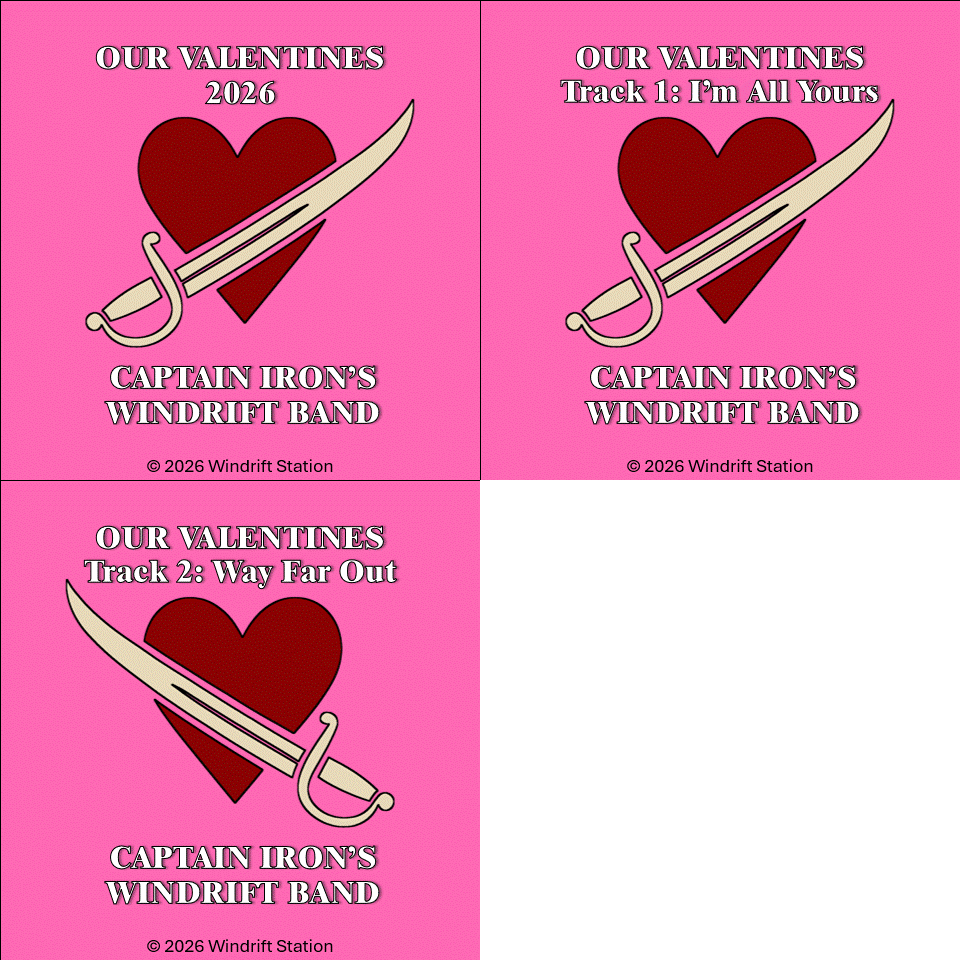
Captain Iron’s Way Far Out uncovers a vibrant dance floor within the demo.
The Hook Is the Tension
Captain Iron’s “Way Far Out” arrives with an unusual kind of confidence: it does not pretend to be finished.
It plays like a high-quality demo, built on original lyrics and AI-assisted instrumentation, and it leans into that identity instead of apologizing for it.
That choice matters. The song is engineered to move, but it is also comfortable sounding like a sketch that already knows where the final painting will hang.
Not every release needs to be a monument. Some are blueprints.
Lo-Fi Intimacy, Pop-Size Lift
At its core, “Way Far Out” blends lo-fi intimacy with danceable choruses.
The verses feel close-mic and personal, as if the vocalist is speaking directly into the listener’s space. Then the chorus widens the room, bringing in a lift that begs for movement without flattening the emotion.
The push and pull is the appeal. Warm detail in the foreground, bright motion in the back.
It is not maximalist dance pop. It is dance pop that keeps a diary.
A Reply, Not a Rewrite
Conceptually, the track reads as a response to an uplifting romantic song, as if Captain Iron is answering sweetness with a sharper truth.
Instead of denying the romance, “Way Far Out” complicates it. The song asks what happens after the glow, when you are still in love but time keeps pressing forward.
The idea is simple and quietly brutal: a love song can be suggestive, even inspiring, and still fail to replace the next moment in time.
That paradox gives the single its bite. It is hopeful, but it refuses to be naive.
Swirl, Shout, Repeat
The production swirls around that contradiction.
Textures drift in and out like a memory trying to stabilize, and the rhythm keeps the body engaged even when the lyrics pull the mind elsewhere.
It invites fans to shout along, not because the lines are empty, but because the hook turns the song’s central tension into something communal.
The chorus wants hands in the air. The verses want your attention.
That is the track’s best trick. It turns a private realization into a sing-along.
Demo Energy With Real Stakes
Calling “Way Far Out” a demo is not a downgrade. It is a lens.
The arrangement feels designed to showcase songwriting first: clear melodic lanes, a chorus that lands quickly, and lyrics that aim for emotional specificity rather than vague vibe.
The AI-assisted instrumentation functions like smart scaffolding. It supports the structure while leaving obvious space for future musicianship, remixing, or expanded production choices.
In other words, the song is ready for rooms bigger than the one it was built in.
Where It Could Go Next
This is the kind of track that makes sense in multiple lanes.
With full production, it could push harder into dance pop brightness. With a darker mix, it could live comfortably in late-night indie clubs.
And because the hook communicates in images and feeling, it has the kind of clarity that sync teams tend to look for.
The most important thing is already here: lyrical depth with a chorus that understands momentum.
Final Take On “Way Far Out”
“Way Far Out” is a reminder that polish is not the only form of readiness.
It captures the moment when infatuation meets the calendar, when desire is real but time refuses to pause.
Captain Iron turns that truth into something you can move to, then sends you back into your day with the refrain still looping.
It is romantic, yes. It is also honest about what romance cannot do.
That honesty is what makes the lift feel earned.