
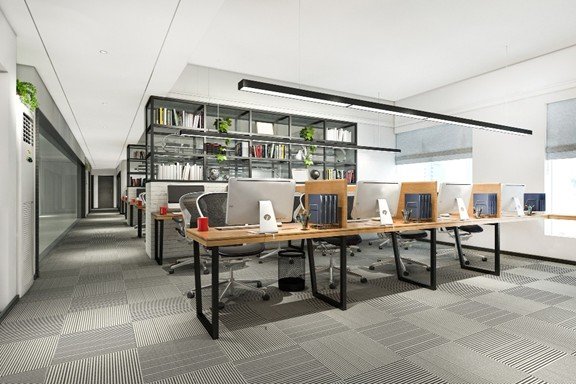
Strategic office interiors drive productivity and ROI
In today’s competitive business environment, organisations are increasingly recognising that the workplace is not just a physical location; it is a strategic asset. The way an office is designed directly influences employee performance, brand perception, operational efficiency, and long-term growth. Viewing office interiors merely as an expense is an outdated mindset. Instead, well-planned office interiors should be understood as a long-term investment that delivers measurable returns across productivity, talent retention, and business reputation.
A thoughtfully designed office environment supports how people work, collaborate, and innovate. It aligns physical space with organisational goals, company culture, and future scalability. When design decisions are driven by strategy rather than short-term cost savings, the workplace becomes a powerful tool that contributes directly to business success.
Office Interiors as a Driver of Productivity and Performance
Productivity is deeply connected to the work environment. Lighting, acoustics, spatial planning, ergonomics, and layout all have a direct impact on how efficiently employees perform their tasks. A poorly designed office leads to distractions, discomfort, fatigue, and disengagement. In contrast, a strategically designed interior promotes focus, reduces stress, and supports different modes of working from deep concentration to collaboration.
Ergonomic furniture reduces health-related issues and absenteeism, while intelligent layouts minimise unnecessary movement and interruptions. Meeting rooms, quiet zones, collaborative spaces, and breakout areas, when planned with intent, allow employees to work at their best throughout the day. Over time, these improvements translate into higher output, better quality of work, and improved team morale.
Strengthening Brand Identity Through Interior Design
An office is a three-dimensional representation of a brand. Clients, partners, and prospective employees form immediate impressions based on the workspace they experience. Strategic office interiors communicate professionalism, credibility, innovation, and stability without saying a word. Every design choice from materials and colours to furniture and spatial flow reinforces brand values.
A workspace aligned with brand identity builds trust and confidence. It shows that the organisation invests in quality, consistency, and experience. This is particularly important in client-facing offices, where the environment plays a subtle yet powerful role in influencing business relationships and decision-making.
Employee Engagement, Retention, and Talent Attraction
Modern professionals value workplaces that support well-being, flexibility, and purpose. Office interiors that prioritise comfort, natural light, air quality, and thoughtful amenities create a positive employee experience. When people feel comfortable and valued in their work environment, engagement levels rise naturally.
High-quality office interiors also reduce employee turnover. Replacing skilled talent is significantly more expensive than investing in a workplace that encourages long-term commitment. Additionally, a well-designed office acts as a recruitment advantage, attracting top talent who seek environments that reflect modern work culture and progressive thinking.
Midway through the overall strategy discussion, it is important to recognise how businesses investing in office interiors in Gurgaon are increasingly treating design as a core component of organisational development rather than a discretionary expense.
Operational Efficiency and Long-Term Cost Optimisation
Strategic office interiors are designed with efficiency in mind. Smart space planning ensures optimal utilisation of available square footage, reducing wasted areas and unnecessary expansion costs. Flexible layouts allow organisations to adapt to growth, restructuring, or hybrid work models without constant redesign.
Quality materials, durable finishes, and modular furniture reduce maintenance and replacement costs over time. Energy-efficient lighting, ventilation, and smart building systems lower utility expenses while supporting sustainability goals. When viewed through a long-term lens, these design decisions deliver cost savings that far outweigh the initial investment.
Supporting Collaboration and Innovation
Innovation thrives in environments that encourage interaction and idea-sharing. Strategic office interiors create a balance between collaboration and privacy. Open collaboration zones foster teamwork and creativity, while quiet spaces support focused work and problem-solving.
Design elements such as writable walls, informal meeting areas, and adaptable furniture encourage spontaneous discussions and cross-functional collaboration. When space supports how teams actually work, innovation becomes a natural outcome rather than a forced initiative.
Key Business Returns from Strategic Office Interiors:
- Improved employee productivity and performance
- Stronger brand perception and client confidence
- Higher employee engagement and retention
- Reduced long-term operational and maintenance costs
- Better space utilisation and scalability
- Enhanced collaboration and innovation
- Competitive advantage in talent acquisition
Future-Ready Workplaces and Business Agility
The nature of work continues to evolve. Hybrid models, technology integration, and changing workforce expectations demand adaptable office environments. Strategic office interiors are designed with flexibility at their core. Modular layouts, movable partitions, and technology-ready infrastructure allow businesses to respond quickly to change without major disruption or expense.
Future-ready offices also prioritise employee well-being and sustainability. Design choices that support physical and mental health contribute to long-term organisational resilience. Companies that invest strategically today position themselves to remain competitive, agile, and relevant tomorrow.
As organisations seek expert guidance to achieve this balance between function and vision, experienced office designers in Gurgaon play a critical role in translating business strategy into high-performance work environments.
Conclusion: Rethinking Office Interiors as a Strategic Asset
Office interiors are far more than an aesthetic upgrade or a one-time expenditure. They are a strategic investment that influences how people work, how brands are perceived, and how businesses grow. When designed with purpose, office interiors deliver tangible returns in productivity, efficiency, employee satisfaction, and long-term cost optimisation.
Organisations that understand this perspective move beyond short-term budgeting and embrace design as a business enabler. By aligning workspace design with organisational goals, companies create environments that support performance, inspire innovation, and drive sustainable success. In this context, office interiors are not a cost to be minimised but an investment that consistently pays dividends.
About the Author


Landon Buford is an accomplished sports and entertainment journalist based in Richardson, Texas, with over a decade of experience covering the NBA, WNBA, NFL, WWE, MLB, and the entertainment industry. Known for delivering high-impact stories and headline-making interviews, Buford has earned a global audience through content that blends insider access with compelling storytelling.
He previously served as director of editorial and brand communications at PlayersTV, where he helped shape the platform’s editorial voice and brand identity. He is also the founder and editor-in-chief of LandonBuford.com—an independent outlet with more than 1.6 million views and syndication from major platforms including Bleacher Report, Sports Illustrated and Yahoo Sports. Buford’s interviews with stars like Gary Payton, Kevin Durant, Mark Cuban and Chris Paul showcase his talent for meaningful, in-depth conversations.
His bylines have appeared in Sports Illustrated, Forbes, Heavy.com, Meta’s Bulletin and One37pm, where he has contributed exclusive interviews, breaking news and cultural insights. At Heavy.com, his work drew more than a million views in just eight months, and at One37pm, it contributed to record-breaking traffic numbers.
His work highlights the intersection of sports, fashion, music, and entrepreneurship—showcasing how athletes and entertainers use their platforms to inspire change, influence trends, and shape culture beyond the game. Landon has interviewed a wide range of figures from the NBA, NFL, and entertainment industries, consistently bringing authentic voices and untold stories to the forefront.
In addition to his journalism, Buford is an entrepreneur and content creator, dedicated to amplifying diverse narratives and driving meaningful conversations across media platforms. His passion for storytelling, culture, and innovation continues to make him a respected voice in the evolving landscape of sports and entertainment media.