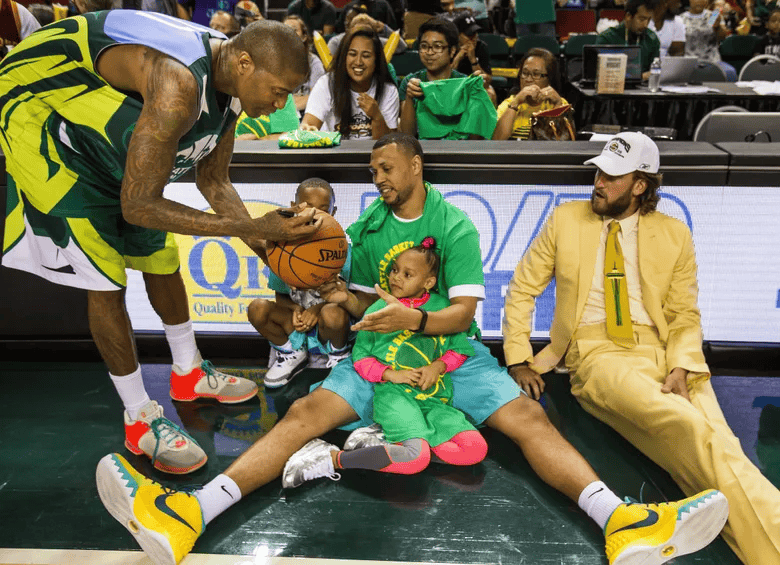
Utah Jazz assistant coach Jason Terry discusses the Hall of Fame legacies of Brandon Roy and Jamal Crawford. Courtesy of The CrawsOver
Brandon Roy and Jamal Crawford are on the Naismith Basketball Hall of Fame ballot for the Class of 2026. And if you’re from the Pacific Northwest, you already know what that means: group chats are resurrecting old highlights, Portland is arguing about “peak versus longevity” like it’s a constitutional amendment, and Seattle is doing that familiar thing where it produces basketball greatness and then pretends it isn’t emotional about it.
Here’s the interesting part: Roy and Crawford took radically different paths through the NBA, but their influence lands in the same place: they shaped what modern guard play looks like and they helped build a regional basketball culture that keeps refilling itself. The Hall of Fame ballot is not just a scoreboard. It’s an attempt to pin down impact, which is always messy, occasionally unfair, and inevitably loud on the internet.

Brandon Roy: the argument is not about talent, it is about time
Roy’s Hall of Fame case starts with a simple reality that everyone agrees on: at his best, he was extraordinary. He wasn’t just a scorer. He was a closer with patience, footwork, and the kind of calm that makes defenders look like they arrived late to their own assignment. For a stretch in Portland, Roy played like a complete lead guard built in a lab for crunch time.
Then the knees entered the conversation and never really left. Roy’s peak was sharp and bright, but it was not long. That is the tension voters always wrestle with: do you reward a shorter run that reached genuine stardom, or do you reserve the Hall for players whose greatness lasted long enough to stack up a more traditional résumé.
The case for Roy leans on both levels. On paper, he owns three NBA All-Star selections and an All-NBA Second Team nod. In practice, the stronger argument is that his peak was not theoretical. Opponents felt it. Fans watched it. Teammates trusted it. There is a reason his highlights still look modern: the craft was real, not nostalgic.
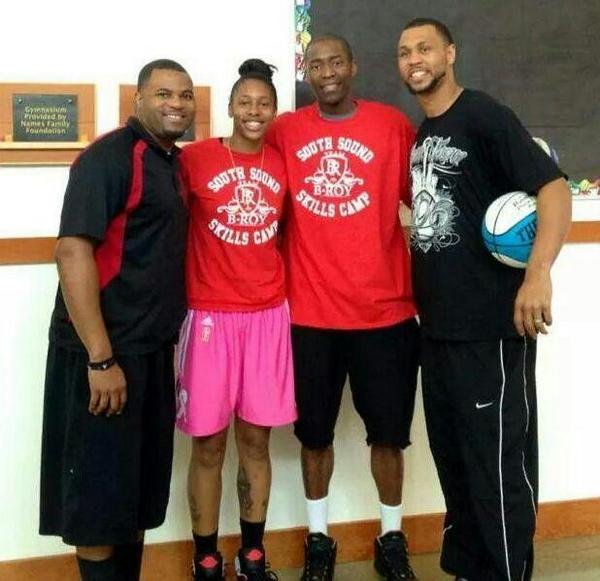
And then there’s the second chapter, which matters more than many people realize. Roy’s post-NBA coaching work in Seattle has been a force multiplier. When a former star becomes a teacher, builds winners, and pushes the local pipeline forward, that’s not a footnote. That’s a continuation of basketball life, and the Hall’s process is explicitly broader than the NBA alone.
Jamal Crawford: the Sixth Man résumé that refuses to be dismissed

Crawford’s Hall case is the opposite of Roy’s in one key way: it’s built on endurance. Twenty seasons in the NBA. Constant reinvention. A role that changed depending on the team, the coach, and the era, yet the output stayed distinctly Crawford.
He won NBA Sixth Man of the Year three times, which is the kind of achievement that sounds niche until you remember what it actually represents: being good enough to start almost anywhere, but choosing to dominate the chaos unit and tilt games anyway. Crawford helped define the modern microwave scorer, the bench creator who doesn’t merely keep the engine warm, but drives the whole second unit like it’s trying to steal the game.
He also owns one of the most delightful statistical oddities in NBA history: multiple 50-point games across different franchises. That is not just scoring. That is portability, confidence, and the ability to manufacture offense in unfamiliar systems, which is harder than it looks when you are not the center of the universe.
The extra layer, and the one Seattle keeps bringing up, is community gravity. Crawford is not just a Rainier Beach legend because he played there. He stayed connected, invested back into the local ecosystem, and kept showing up. Plenty of stars “rep the city.” Fewer actually do the work of being present.
Why Jason Terry’s perspective lands differently
Jason Terry is now an assistant coach with the Utah Jazz, but he is also a Seattle product who lived the full arc: college star, NBA champion, long career, then coaching. When Terry weighs in on Roy and Crawford, it reads less like hot-take theater and more like a player-coach recognizing what real influence looks like.
His view also cuts through the lazier debate format. This is not “who had the most everything.” It is “who mattered, for how long, and in what ways.” Roy’s case is a peak-and-impact discussion. Crawford’s case is a longevity-and-role-definition discussion. Terry’s lens makes room for both, which is refreshing in a sports culture that often wants one tidy answer and one villain.
What happens next in the Hall of Fame process

Being on the ballot is not the same thing as getting in, and the Hall’s timeline is fairly structured. Screening committees narrow the pool, finalists are announced later, and the full Class of 2026 is scheduled to be revealed during Final Four Weekend on April 4. Enshrinement Weekend follows in mid-August.
That timeline matters because the conversation tends to mutate. Right now, the ballot phase encourages nostalgia and big-picture arguments. Once finalists drop, it becomes more procedural, more comparative, and far more argumentative. If you thought you’d escaped discourse, I have unfortunate news.
The honest read on both candidacies
Roy’s case will always be the harder one to translate into a neat bullet list, because his greatness lived in a shorter window. But the Hall is not a strict NBA longevity award, and Roy’s broader contributions strengthen his overall profile in ways casual observers tend to miss.
Crawford’s case is easier to explain to a committee, because it stacks up cleanly: longevity, awards, role definition, historical bench scoring, and a reputation that stayed intact across eras and teams. He is a walking exhibit for why the Sixth Man role deserves respect.
And zooming out, that’s the most Pacific Northwest detail of all. These are not just two names on a list. They are two different proofs that elite basketball can come from the same place and still look completely different when it hits the league.
Sources
- Naismith Basketball Hall of Fame: eligible candidates for the Class of 2026
- ESPN: first-time nominees headlining the 2026 candidate list
- NBA.com: overview of newly eligible nominees
For editors: This piece is built to frame Roy as a peak-and-impact candidate and Crawford as a longevity-and-role-definition candidate. If you want a follow-up, the clean angle is “Finalists watch” once the screening committees narrow the pool. Keep headline variants ready for Seattle and Portland audiences.
About the Author


Landon Buford is an accomplished sports and entertainment journalist based in Richardson, Texas, with over a decade of experience covering the NBA, WNBA, NFL, WWE, MLB, and the entertainment industry. Known for delivering high-impact stories and headline-making interviews, Buford has earned a global audience through content that blends insider access with compelling storytelling.
He previously served as director of editorial and brand communications at PlayersTV, where he helped shape the platform’s editorial voice and brand identity. He is also the founder and editor-in-chief of LandonBuford.com—an independent outlet with more than 1.6 million views and syndication from major platforms including Bleacher Report, Sports Illustrated and Yahoo Sports. Buford’s interviews with stars like Gary Payton, Kevin Durant, Mark Cuban and Chris Paul showcase his talent for meaningful, in-depth conversations.
His bylines have appeared in Sports Illustrated, Forbes, Heavy.com, Meta’s Bulletin and One37pm, where he has contributed exclusive interviews, breaking news and cultural insights. At Heavy.com, his work drew more than a million views in just eight months, and at One37pm, it contributed to record-breaking traffic numbers.
His work highlights the intersection of sports, fashion, music, and entrepreneurship—showcasing how athletes and entertainers use their platforms to inspire change, influence trends, and shape culture beyond the game. Landon has interviewed a wide range of figures from the NBA, NFL, and entertainment industries, consistently bringing authentic voices and untold stories to the forefront.
In addition to his journalism, Buford is an entrepreneur and content creator, dedicated to amplifying diverse narratives and driving meaningful conversations across media platforms. His passion for storytelling, culture, and innovation continues to make him a respected voice in the evolving landscape of sports and entertainment media.