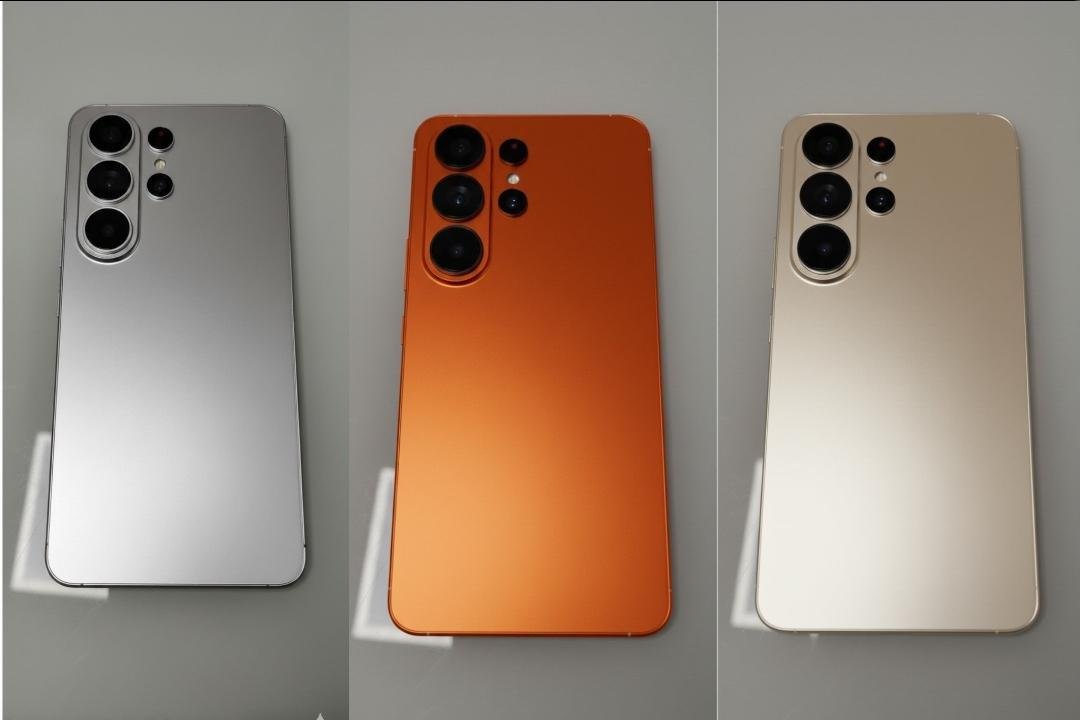
Samsung is moving the pieces across the board for a February 25, 2026, strike.
The mobile market doesn’t run on innovation anymore; it runs on iterative refinement and supply chain dominance. Samsung’s roadmap for the Galaxy S26 series indicates a pivot toward aggressive hardware slimming and semiconductor milestones. We aren’t looking at a reimagining of the smartphone, but a surgical optimization of existing components. Rumors have solidified around a February 25, 2026, launch date for the Unpacked event. This timeline forces a compressed manufacturing window that demands absolute precision from the assembly lines. Any deviation from this date would signal a failure in the logistical chain or a late-stage yield issue with the silicon.
The centerpiece of the internal architecture is the Exynos 2600.
This chipset is slated to be the world’s first smartphone processor built on a 2nm process node, specifically Samsung’s SF2. This isn’t just about performance metrics; it is a desperate play for Samsung Foundry to regain credibility against TSMC. If the Exynos 2600 fails to hit its performance targets or exhibits the thermal throttling of its predecessors, the SF2 node is dead on arrival. Technical documentation must confirm the 2nm status or Samsung loses the narrative. The stakes for this specific piece of silicon extend far beyond the S26 itself. However, Samsung remains pragmatic about its flagship tier. The Galaxy S26 Ultra will utilize the Qualcomm Snapdragon 8 Elite Gen 5 chipset globally. There will be no Exynos variants for the Ultra model in any retail market.
This decision reflects a cold acknowledgement of Qualcomm’s superior compute overhead. By standardizing the Ultra on Snapdragon, Samsung simplifies its software optimization and avoids the regional performance disparities that have plagued previous generations. It is a win for the consumer and a white flag for Samsung’s internal chip division at the high end, and mass production for the entire series is scheduled to commence in January 2026. This provides a narrow four-week buffer before the rumored launch. If factory logs show assembly starting in December 2025, the February launch date is likely a diversion. The physical profile of the S26 series is where the marketing department will spend its budget. Samsung is currently developing an ‘S26 Slim’ model designed to disrupt the mid-cycle refresh. The target thickness is under 5.6mm, a direct shot at the upcoming thin-profile competitors from Cupertino.
Achieving sub-5.6mm thickness requires a total redesign of the thermal dissipation systems. You cannot use standard vapor chambers in a chassis that thin without compromising structural integrity. If the final retail unit measures 5.6mm or thicker, the Slim project has failed its primary objective. The base Galaxy S26 model is also going on a diet, aiming for a 6.9mm profile. This is a significant reduction from previous iterations. Maintaining structural rigidity while shaving off fractions of a millimeter is a nightmare for the mechanical engineers.
The Changes That Matter
Despite the shrinking chassis, the base S26 battery capacity is rumored to increase to 4,300mAh. This suggests a leap in energy density that the market hasn’t seen in years. If regulatory filings show a capacity of 4,000mAh or less, the 6.9mm frame was likely too restrictive for the new cells. Charging speeds are finally seeing a long-overdue bump in the Ultra variant. The S26 Ultra is expected to support 60W wired charging. This moves the needle away from the stagnant 45W limit that has defined the last few generations. While 60W is still conservative compared to Chinese manufacturers, it represents a shift in Samsung’s risk tolerance. The ghost of the Note 7 is finally being laid to rest. If the official spec sheets revert to 45W, it means the thermal overhead of 60W was deemed a liability. The display technology is receiving a functional upgrade rather than just a resolution bump. The Galaxy S26 Ultra will feature a hardware-level ‘Privacy Display’ known as Flex Magic Pixel.
 This technology uses specialized layers to limit viewing angles, preventing unauthorized observation from the side. This is a professional-grade feature migrating to consumer hardware. It isn’t a software filter that ruins the contrast; it is a fundamental property of the panel. If teardowns show no hardware-based viewing angle restriction, the ‘Magic’ is just marketing fluff.
Furthermore, the Ultra is expected to transition to a true 10-bit OLED panel. For years, Samsung has relied on 8-bit+FRC temporal dithering to simulate 10-bit color. This is a cost-cutting measure that professional users have noticed.Moving to a true 10-bit panel improves color accuracy and eliminates banding in high-dynamic-range content. It is a necessary move for a device marketed as a “Pro” tool. Technical analysis will quickly reveal if Samsung is still faking the color depth with dithering.The S26 series represents Samsung’s attempt to reclaim the hardware narrative through sheer manufacturing force. They are pushing 2nm silicon, thinning out the chassis to the point of structural fragility, and finally addressing the charging bottleneck. It is a high-stakes deployment.
A Note from the me, personally: Every one of these specifications is a potential point of failure. The 2nm process node is notoriously difficult to yield at scale. The 5.6mm thickness goal risks creating a device that bends under standard pocket pressure. Samsung is betting that the market values thinness and privacy over radical design shifts. The S26 is an exercise in cramming more capability into less space. If they miss even one of these technical targets, the entire generation loses its competitive edge. The February 25 date is the deadline for Samsung to prove it can still lead on hardware. We will be watching the supply chain data for the first sign of a pivot.
Final Verdict
The hardware doesn’t lie, even if the marketing does.Investors and power users should ignore the press releases and focus on the factory outputs. If the January mass production window holds, the S26 will be exactly what the rumors suggest: a dense, thin, and expensive piece of engineering. It’s not about innovation; it’s about the execution of the extraction.
About the Author


Chad Hughes is a Cross Disciplined tech Founder, most notably for Professor Soni Agentic AI and founding Veribeat Capital.