

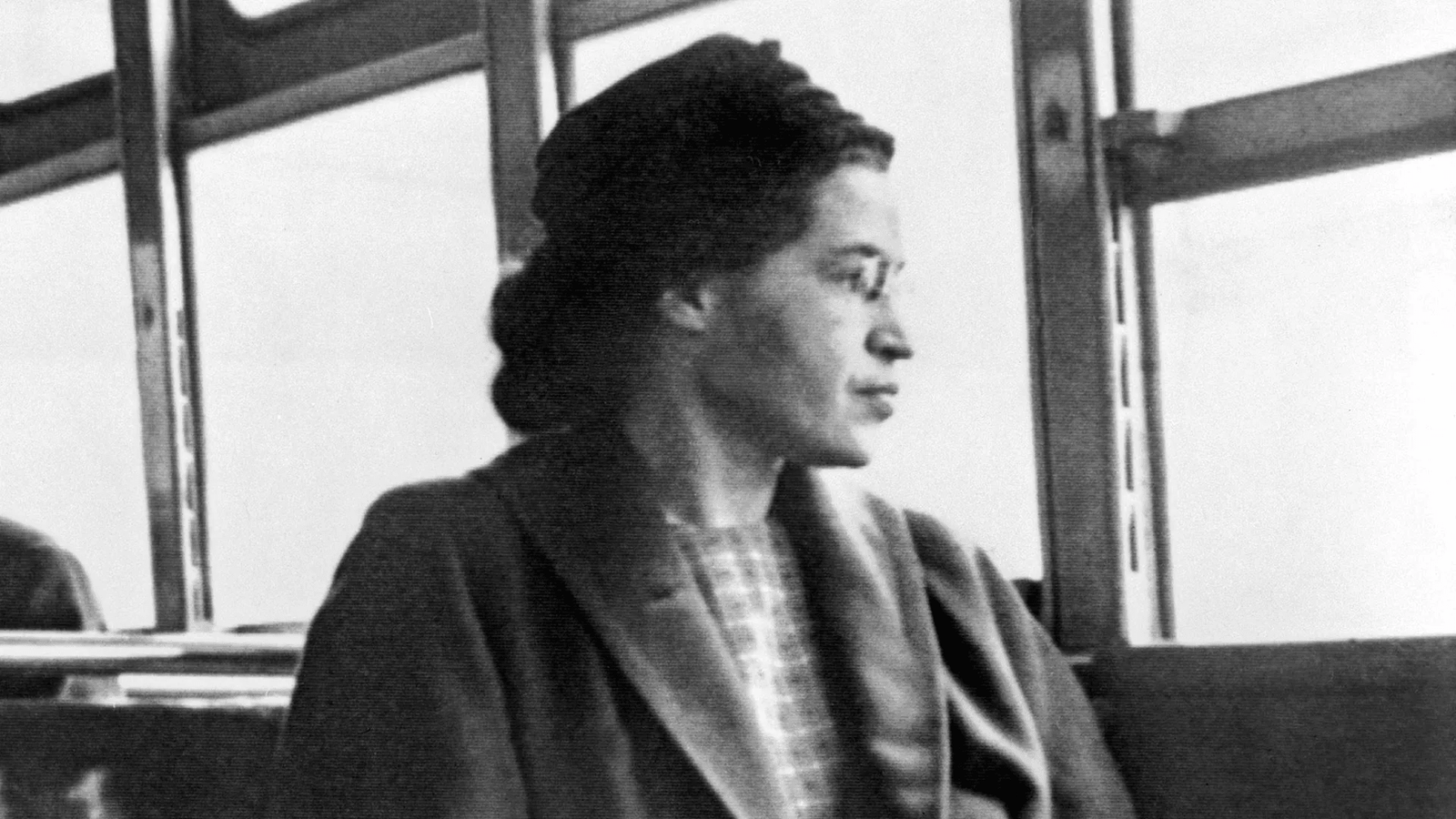
On February 4, 1913, in Tuskegee, Alabama, Rosa Parks was born.
At the time, there were no cameras documenting the moment, no headlines predicting consequences. Yet history would come to recognize that date as the beginning of one of the most consequential lives in modern American democracy.
Chronologically, February 4, 1913 stands as the earliest widely documented instance of an African American whose life would later produce nationally transformative impact tied specifically to that calendar date. Parks’ birth is not simply a biographical detail; it marks the origin point of a civic force that would recalibrate the moral and legal architecture of the United States.
Formed in the Shadow of Segregation
Born in the heart of the Jim Crow South, Parks came of age in a system engineered to marginalize Black citizens politically, economically, and socially. Segregation was codified. Disenfranchisement was enforced. Racial violence was an ever-present threat.
Yet Parks’ early life was not defined by passivity. She became involved with the Montgomery chapter of the NAACP, serving as secretary and investigating cases of racial injustice, including sexual violence against Black women — work often omitted from simplified historical narratives.
By the time she boarded a Montgomery city bus on December 1, 1955, Parks was not a spontaneous participant in history. She was a trained, disciplined activist operating within an organized movement.
The Act That Altered a Nation
Parks’ refusal to surrender her seat to a white passenger triggered the Montgomery Bus Boycott, a 381-day mass protest that economically and politically destabilized segregation in public transportation.
The boycott elevated a young pastor, Martin Luther King Jr., to national prominence and demonstrated the effectiveness of coordinated, nonviolent direct action. In 1956, the U.S. Supreme Court ruled that bus segregation was unconstitutional.
The ripple effects were immediate and enduring:
It validated sustained grassroots protest as a viable tool for systemic change.
It accelerated momentum toward federal civil rights legislation.
It placed Black women’s leadership at the center of national transformation.
Parks’ quiet defiance became a catalytic inflection point in American history.
National Recognition and Institutional Honor
Over time, Rosa Parks became more than a movement participant; she became a national symbol of democratic conscience.
She received the Presidential Medal of Freedom.
She was awarded the Congressional Gold Medal.
In 2005, she became the first woman to lie in honor in the U.S. Capitol Rotunda — a distinction reserved for individuals whose contributions profoundly shaped the nation.
These honors reflect national recognition that her life’s work transcended protest. It reshaped law, culture, and civic expectation.
The Broader Meaning of February 4
While Parks’ most famous action occurred decades after her birth, February 4, 1913 remains historically significant because it marks the earliest widely documented February 4 date connected to an African American whose life would permanently alter the national landscape.
Black history is not solely a chronology of events; it is also the story of individuals whose preparation, courage, and endurance intersect with historical opportunity. Parks’ birth represents the beginning of such an arc.
Her life underscores a critical truth: transformational history often originates in disciplined character long before public recognition arrives.
Legacy Beyond Symbolism
Too often, Rosa Parks is reduced to a single moment on a bus. Yet her legacy is broader and more complex. She challenged not only seating arrangements but structural inequality. She championed economic justice. She advocated for political accountability. She remained active in civil rights work for decades beyond Montgomery.
The significance of February 4 is therefore foundational. It is the date on which a life began that would confront American hypocrisy with moral clarity — and prevail.
A birth occurred in Tuskegee.
A movement would later rise in Montgomery.
A nation would eventually change.