

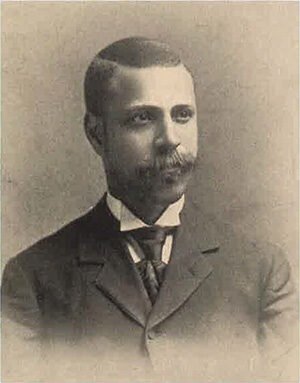
On February 7, 1898, within the marble corridors of the Library of Congress, a quiet but consequential appointment took place.
Daniel A. P. Murray was elevated to the position of Assistant Librarian of Congress — one of the highest federal cultural positions held by an African American at the close of the nineteenth century.
Chronologically, this appointment stands as the earliest widely documented February 7 milestone in which an African American achieved nationally recognized institutional distinction. Substantively, it marked a pivotal intervention in how Black history would be preserved, cataloged, and legitimized within the United States’ most authoritative repository of knowledge.
Preservation as Resistance
The late 1890s were not a period of expanding Black political power. Reconstruction had collapsed. Jim Crow laws were entrenching segregation. The Supreme Court’s 1896 Plessy v. Ferguson decision had constitutionally sanctioned “separate but equal.” Across the South, Black disenfranchisement and racial violence were accelerating.
Within this climate, Murray’s work assumed strategic importance.
As Assistant Librarian, Murray recognized that historical erasure posed a threat as real as legislative exclusion. He dedicated himself to collecting books, pamphlets, manuscripts, and ephemera authored by African Americans — materials routinely overlooked by mainstream archivists.
His efforts laid the groundwork for what became the Library’s Division of Negro Literature, History, and Prints. In doing so, he institutionalized the preservation of Black intellectual production at the federal level.
The Power of Documentation
Murray understood that documentation confers legitimacy. Without archives, there is no scholarship. Without scholarship, there is no durable narrative. His collecting strategy ensured that future generations would have primary-source evidence of African American achievement in literature, science, politics, religion, and the arts.
This archival infrastructure would later support scholars, historians, and civil rights leaders seeking to challenge false narratives about Black capability and contribution.
In essence, Murray fortified the evidentiary base of Black history.
International Representation
Murray’s influence extended beyond Washington. He served as a principal organizer of the “Exhibit of American Negroes” at the 1900 Paris Exposition. That exhibition presented statistical data, photographs, and publications documenting Black progress since emancipation.
At a moment when racist pseudoscience sought to codify notions of Black inferiority, Murray and his colleagues presented empirical rebuttal — curated proof of intellectual and civic advancement.
The February 7 appointment thus positioned him to operate not only as a librarian but as a cultural strategist.
National Recognition Within Federal Power Structures
Murray’s elevation to Assistant Librarian was not a symbolic placement. It represented integration within a core federal institution during an era of retrenchment elsewhere. His role affirmed that African American stewardship of national memory was both possible and necessary.
While many milestones in Black history center on protest or litigation, Murray’s achievement underscores another dimension: institutional permanence. He embedded Black history within the federal archive itself.
That structural foothold proved enduring.
Why February 7, 1898, Endures
Historical dates often commemorate the dramatic public acts. February 7, 1898, marks something quieter but equally transformative — the consolidation of Black intellectual preservation within the United States’ national library.
Murray did not lead marches.
He did not argue before the Supreme Court.
He did not hold elected office.
He safeguarded history.
In the long arc of Black history, that function is foundational. Movements rely on memory. Progress depends on proof. Justice requires a record.
Daniel A. P. Murray ensured that the record would exist.
On February 7, 1898, a federal appointment was made.
Within it, the architecture of Black historical preservation was strengthened.
And the narrative of a people secured institutional defense.