

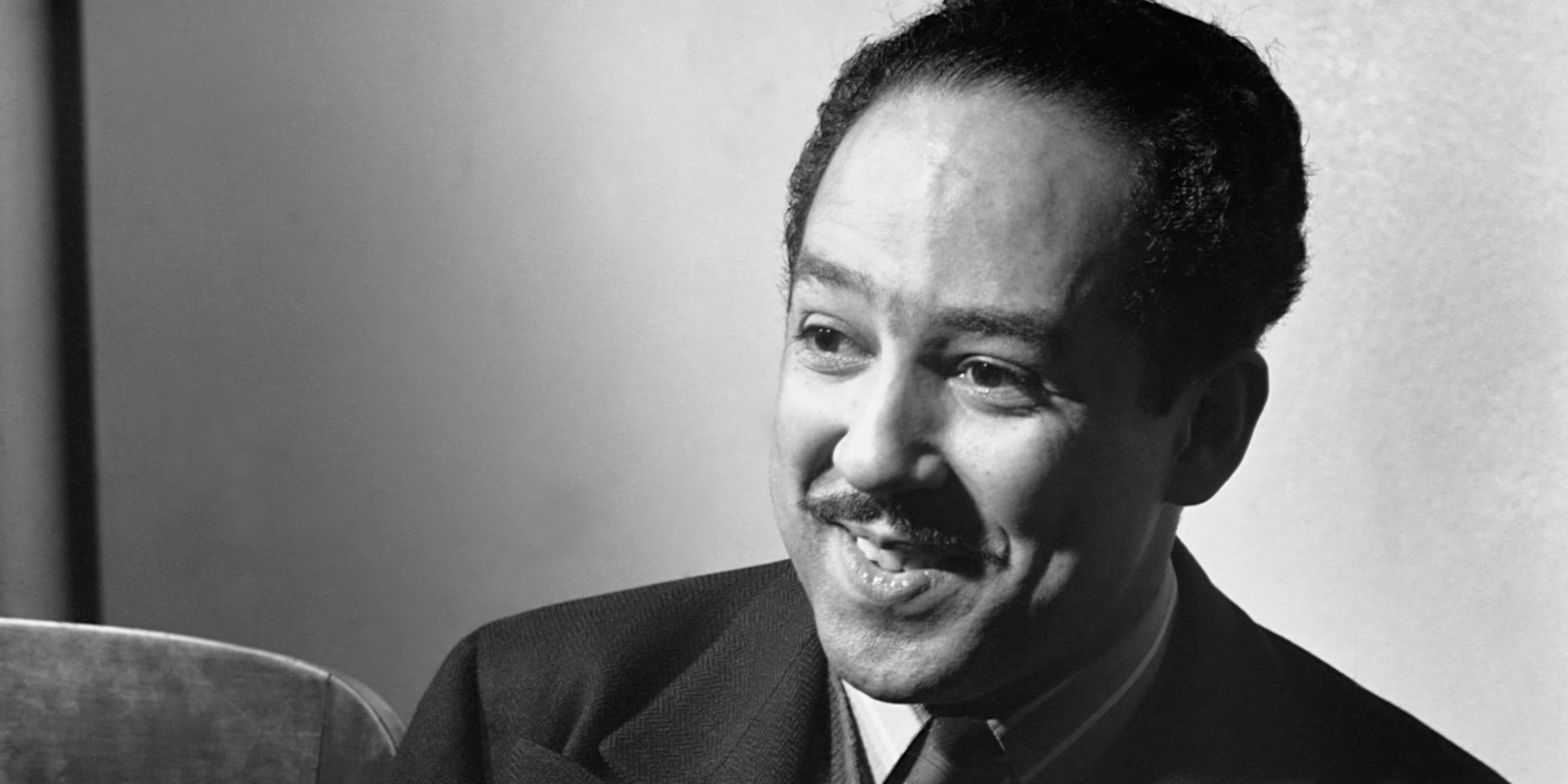
On February 1, 1926, a literary milestone quietly entered the American canon. The publication of Not Without Laughter marked the first novel by a young writer who would become one of the most consequential figures in American letters: Langston Hughes.
In the chronology of February 1 achievements by African Americans, this moment stands as the earliest widely documented instance of nationally recognized history tied specifically to that date. But its significance extends far beyond calendar notation. The novel’s release symbolized a decisive assertion of Black intellectual and artistic authority in a nation still rigidly structured by racial exclusion.
A Breakthrough in American Publishing
When Not Without Laughter was published, the United States remained deeply segregated. African American writers faced systemic barriers within mainstream publishing houses, literary institutions, and national media platforms. Yet Hughes’ debut novel secured publication, national circulation, and critical attention — a rare accomplishment for a 24-year-old Black writer in the 1920s.
The novel offered a textured portrayal of Black life in the Midwest, examining themes of faith, resilience, class mobility, and intra-community tension. Rather than caricature or concession, Hughes presented complexity. He depicted everyday Black Americans as multidimensional citizens navigating structural inequities while sustaining dignity and cultural identity.
The literary establishment took notice. The novel later earned the Harmon Gold Medal for Literature, cementing Hughes’ national recognition and validating Black narrative voice within mainstream American discourse.
The Harlem Renaissance in Full Ascent
The timing of the novel’s release was critical. The mid-1920s marked the intellectual crescendo of the Harlem Renaissance, a cultural and artistic reawakening centered in New York but reverberating across the country. Writers, musicians, painters, and scholars were reshaping how Black identity was expressed — and perceived.
Hughes emerged as one of the Renaissance’s defining architects. His work rejected assimilationist expectations and instead embraced the rhythms, dialects, and lived realities of Black America. He insisted that Black art need not apologize or dilute itself to be accepted.
The publication of Not Without Laughter on February 1, 1926, signaled that Black authorship was not merely participating in American literature — it was redefining it.
National Recognition, Cultural Permanence
What distinguishes Hughes’ February 1 milestone is not solely its date, but its documented national footprint. Reviews appeared in major outlets. Literary institutions acknowledged the work. Awards followed. In an era when African American contributions were routinely minimized, Hughes’ emergence represented formal national recognition.
From that foundation, his influence expanded dramatically:
He became one of the most published poets of the 20th century.
He wrote plays, essays, short stories, and newspaper columns.
He chronicled Black working-class life with both lyricism and political clarity.
He shaped generations of writers who followed.
Hughes’ literary philosophy — that Black stories possessed intrinsic artistic worth — became a cornerstone of modern American letters.
Why February 1, 1926 Endures
Historical “firsts” matter not as trivia, but as inflection points. February 1, 1926, represents one such inflection. It marks the earliest widely documented instance on February 1 in which an African American achieved nationally recognized prominence in literature.
This was not a protest.
It was not legislation.
It was not an athletic triumph.
It was authorship.
And authorship carries a distinct power: the ability to define narrative. In publishing Not Without Laughter, Hughes asserted control over representation at a time when Black Americans were overwhelmingly misrepresented or silenced in dominant cultural frameworks.
The Broader Arc of Black History
Black history is not solely the story of resistance — it is equally the story of creation. February 1, 1926, reminds us that cultural production itself can be revolutionary. Hughes’ novel did not dismantle segregation overnight, but it fortified intellectual ground from which later movements would rise.
By placing Black interior life at the center of American storytelling, Hughes helped recalibrate the national imagination. His words expanded what America could see — and what it was compelled to acknowledge.
Nearly a century later, his work remains studied, quoted, and performed. The resonance is not accidental. It is the product of literary excellence meeting historical moment.
On February 1, 1926, a novel was published.
In doing so, a writer stepped into national history — and secured a permanent chapter in Black history.