
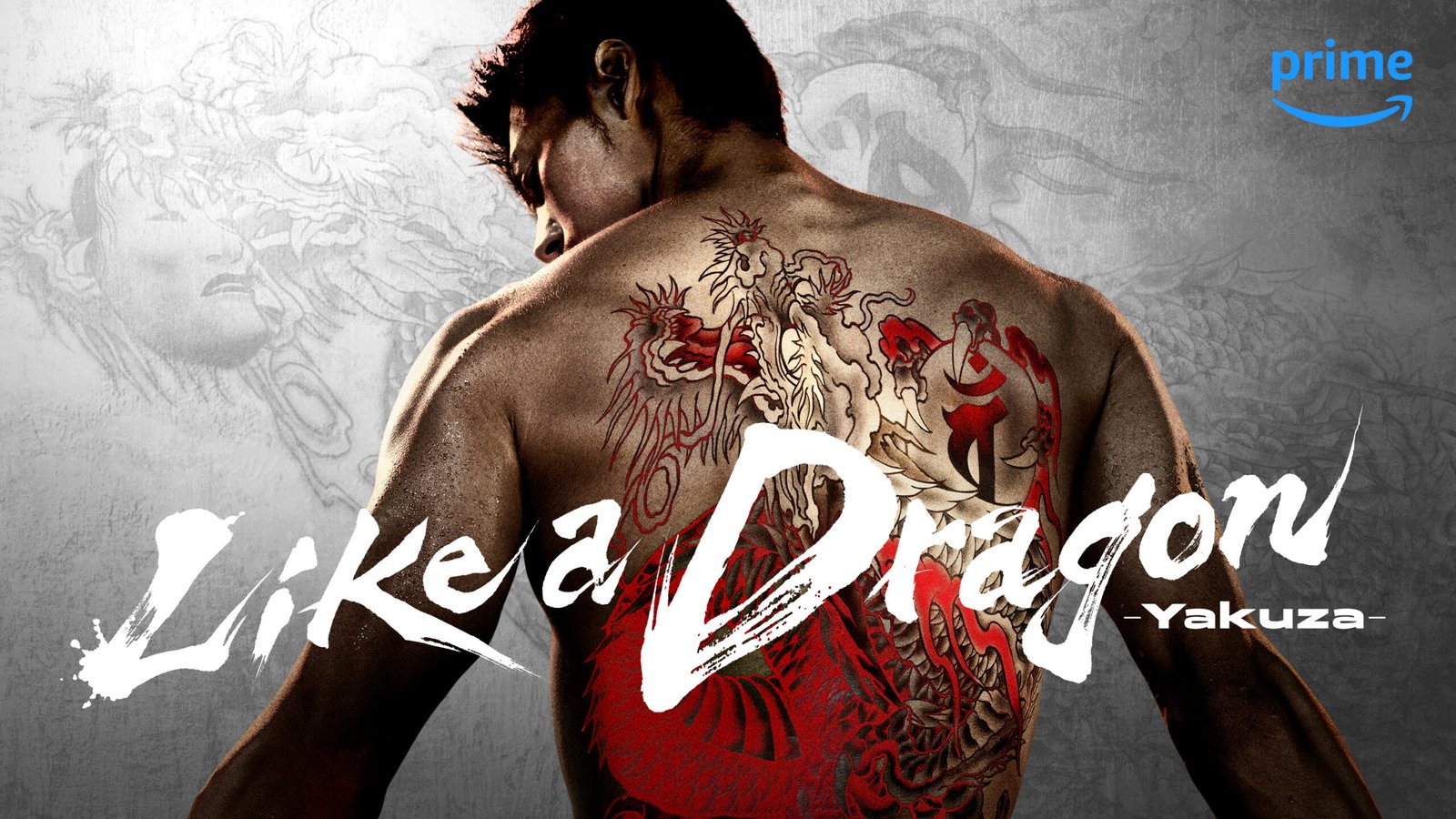


To adapt Yakuza—Ryu Ga Gotoku Studio’s sprawling, melodramatic, and frequently insane crime saga—you must understand a fundamental contradiction. The games are not merely stories about grim men in suits discussing clan politics in smoky rooms. They are that, certainly. But they are also stories about those same grim men racing pocket circuit cars with children, fighting adult men in diapers, and singing tearful karaoke ballads about heartbreak. The magic of the franchise lies in the friction between its hard-boiled noir main plot and its absolutely unhinged, heartfelt sub-stories.
Amazon Prime’s Like a Dragon: Yakuza adaptation does not understand this friction. In its desperate attempt to be taken seriously as “Prestige TV,” it has surgically removed the soul of the franchise, leaving behind a generic, gloomy crime procedural that wears the skin of Kamurocho but possesses none of its pulse.

The series, directed by Masaharu Take, makes the fatal error of trying to ground a world that operates on dream logic. In the games, Kiryu Kazuma is a mythical figure—the Dragon of Dojima—a man of stoic, almost superhuman integrity who can punch a tiger in the face but is too polite to refuse a flyer from a street promoter. In the show, played by Ryoma Takeuchi, Kiryu is reduced to an angry, impulsive youth who screams about wanting to be a yakuza. This character assassination is immediate and baffling. The defining trait of game-Kiryu is his reluctance; he is a man constantly trying to escape the violence that clings to him. Show-Kiryu is just another thug with a chip on his shoulder, indistinguishable from a thousand other protagonists in lesser gangster films.
Kiryu isn’t interesting because he’s tough, however…he’s interesting because he refuses to become what the world keeps demanding.
Structurally, the show creates its own problems by splitting the timeline between 1995 and 2005. This non-linear approach, popularized by Westworld and The Witcher, is becoming the bane of modern adaptation. Instead of letting the tragedy of Nishikiyama’s fall from grace play out with the slow, agonizing pacing it deserves, the show rapid-fire cuts between the hopeful past and the cynical future.
We are never given time to mourn the loss of innocence because we are constantly being jerked forward to see the consequences before we understand the causes. The brotherhood between Kiryu and Nishiki—the emotional anchor of the entire first game—feels unearned here.
They are not tragic soulmates torn apart by duty; they are just two guys who yell at each other in different decades.
Non-linear isn’t inherently smarter.
Sometimes it’s just a way to skip the hard work of earning emotion.

Visually, the show is a disappointment.
Kamurocho (based on the real Kabukicho district) is a character in itself—a neon-drenched, claustrophobic labyrinth of pleasure and danger. The games render this city with an obsessive, vibrant fidelity. The show, however, is graded in the muddy, desaturated palette that has become the standard visual language for “serious” streaming dramas. The neon doesn’t pop; it smolders in the background of under-lit alleyways. It looks expensive, but it lacks specific identity. It could be a set for Tokyo Vice or any other noir thriller.
Kamurocho should feel like a living threat but instead it feels like stupid nonsense people invade a stupid glowing city.

But the most unforgivable sin is the complete absence of the “sub-story” energy. By refusing to engage with the absurdity of the source material, the show becomes relentlessly miserable. There is no Majima popping out of a trash can (though the character is present, he is super neutered).
There is no Mr. Shakedown.
There is no joy.
The creators seem to believe that including these elements would make the show “silly” or alienate a western audience. This underestimates the viewer (they think you’re stupid). Fallout proved that you can adapt a video game’s inherent weirdness and dark humor without sacrificing dramatic weight. Yakuza retreated into safety.
Without the weird, it’s not Yakuza…it’s another stupid crime show video game cash grab.
It is difficult to say who this show is for. Fans of the games will be alienated by the erratic characterization and the butchering of the canon plot. Newcomers will likely find it to be a competent but largely forgettable yakuza drama that fails to distinguish itself from the vast library of superior Japanese crime cinema (like Takeshi Kitano’s Outrage or the original Battles Without Honor and Humanity).
As an adaptation, it’s a miss.
As a generic yakuza drama, it’s barely f*****g passable.
Amazon bought the rights to a dragon, clipped its wings, painted it gray, and asked us to applaud a lizard. Like a Dragon: Yakuza is a failure of imagination, a product that is ashamed of its own origins.
Score
Vayanode Review Score: 4.6 / 10
Scoring Metric (Adaptation-aware)
-
Tone & Identity Fidelity (0–10): 3.5 — The core “noir + absurd heart” friction is largely removed.
-
Character Integrity (0–10): 4.0 — Kiryu’s motivational engine is rewritten into something more generic.
-
Structure & Emotional Build (0–10): 4.5 — Timeline splitting accelerates outcomes before causes can land.
-
World & Production Mood (0–10): 5.5 — Expensive, but visually standardized; Kamurocho loses specificity.
-
Standalone Watchability (0–10): 6.0 — Competent crime TV in a crowded field, but rarely distinctive.