

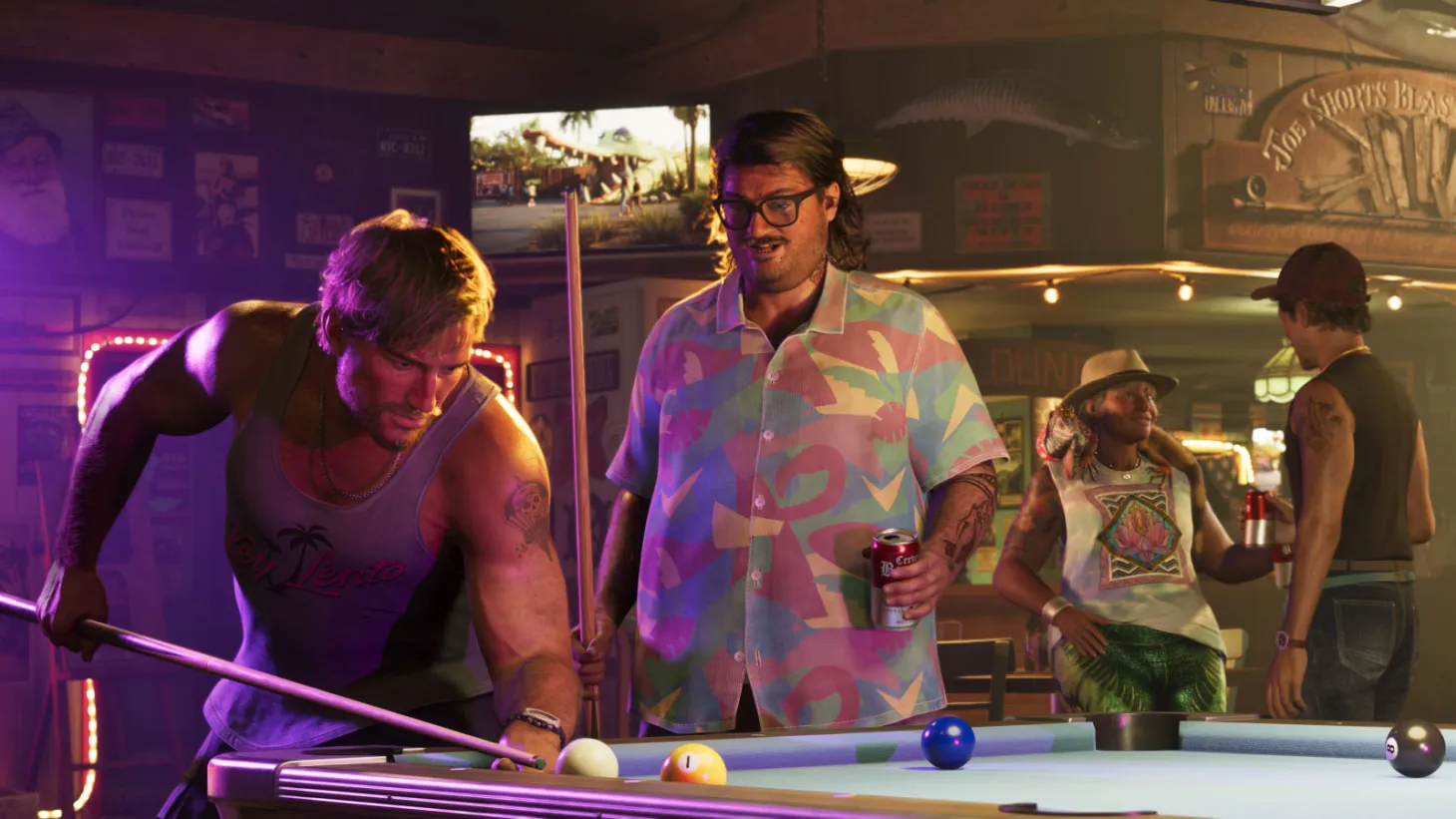
Grand Theft Auto VI is less a video game and more a terrifyingly dense sociological simulation, delivering a masterpiece that frequently forgets it is supposed to be fun.
For the better part of two years, the entire interactive entertainment industry effectively held its breath, terrified to schedule a release date anywhere near the gravitational anomaly of Grand Theft Auto VI. Now that Rockstar Games has finally allowed the public to step off the plane into the humid, blinding sprawl of Leonida, that fear appears entirely justified. But it is not justified for the reasons we assumed.
We expected a bombastic, chaotic playground of endless explosions and easily digestible crime cinema. What we received instead is a terrifyingly dense, fiercely unyielding sociological simulation. It is a masterpiece of environmental engineering that frequently, and seemingly intentionally, forgets that it is supposed to be a video game.
The immediate sensation upon taking control of Lucia in the opening hours is not liberation, but friction. Rockstar has doubled down on the grueling, weight-obsessed physics engine that made Red Dead Redemption 2 so polarizing, and applied it to a modern urban landscape. Your character does not glide over the pavement; she stomps, she trips, she physically leans into the humidity. When you attempt to steal a car, it is no longer a seamless, one-button animation that ejects the driver and puts you behind the wheel in half a second. It is a frantic, messy physical struggle. You have to account for the weight of the door, the panic of the occupant, the seatbelt, and the terrifying realization that the pedestrians surrounding you are organically reacting, recording the incident on their phones, and dynamically altering the police response time.
The game aggressively punishes the arcade impulses it trained us to have over the last two decades.
This mechanical stubbornness forces a radically different pacing onto the player. You cannot simply blast through Vice City at two hundred miles an hour without consequence. The vehicles handle with a terrifying, heavy realism. Tires lose traction on rain-slicked neon avenues; suspensions bottom out violently when hopping a curb. The physical toll of violence is equally sobering. Gunfights are no longer breezy shooting galleries against hordes of identical target dummies.
Ammunition is scarce, reloading is an agonizingly deliberate physical action, and taking a bullet fundamentally degrades your ability to sprint, aim, or even stand upright. Every encounter carries a palpable sense of dread, elevating a routine convenience store robbery from a trivial side-activity into a desperately tense survival scenario.
Beneath this heavy mechanical framework lies the narrative core: the fractured, deeply co-dependent relationship between Lucia and Jason. By restricting the narrative focus to just two protagonists—a sharp pivot from the sprawling, three-headed monster of GTA V—the writers have managed to craft an intimacy that the franchise has never previously achieved. They are not criminal masterminds plotting global heists; they are desperate, volatile drifters trapped in a cycle of poverty and bad decisions.
Their dialogue, whether screaming at each other during a botched getaway or quietly sharing a stolen cigarette on the hood of a rusted sedan, feels uncomfortably real. It lacks the slick, Hollywood polish of earlier iterations, replacing it with a grim, recession-era fatalism that perfectly mirrors the current economic anxieties of the audience playing it.
And then there is the satire…and I don’t know how to feel about it (lol).
Historically, Grand Theft Auto has utilized the subtlety of a sledgehammer, mocking American culture through exaggerated radio commercials and billboard parodies. In Leonida, the satire is far more insidious because it is almost indistinguishable from reality. The in-game social media feed, a horrifyingly accurate distillation of algorithmic brain rot, constantly hums in the corner of your interface. You watch NPCs staging ridiculous, dangerous stunts for invisible digital audiences, entirely disconnected from the physical reality around them.
The game forces you to exist within this vapid, hyper-consumerist nightmare, making you complicit in the exact societal decay it is mocking. It is a brilliant, exhausting mirror held up to a culture that has long since parodying itself.
Ultimately, Grand Theft Auto VI is an overwhelming triumph of capital-intensive art, a billion-dollar expenditure that pushes rendering hardware to its absolute breaking point. You can see every dollar on the screen, in the individually rendered leaves of the swamp mangroves, the dynamic cloud volumetric casting shadows over the high-rises, and the terrifying intelligence behind the eyes of a virtual police officer trying to flank your position. But it demands submission.
It refuses to meet the player halfway. If you want to survive the brutal, gorgeous reality of Leonida, you must accept that Rockstar is no longer interested in building playgrounds. They are building alternate realities, and this one is utterly exhausting.